


A customer asks a useful question. Someone replies, a few details are exchanged, and the next step seems clear. Then the conversation moves to another colleague, the context is lost or the promised follow-up never happens. That gap between a conversation and a completed action explains why Implifie exists. Reaching a customer is only the beginning. The harder work is remembering what matters, making responsibility clear and helping the person move forward without starting the story again.
The original idea grew from work in business-to-business software and conversations about sales, follow-ups and customer experience. The recurring need was practical: give founders, salespeople and small teams a clearer way to continue the customer relationship. We built Implifie around that purpose. Technology should support the work of understanding and helping a customer, while leaving the business responsible for its promises, decisions and service.
Why Implifie exists beyond the first reply
A quick response can be helpful, but it does not establish that the customer received the right answer or that the promised action happened. A sales conversation may need a product check, an accurate quote or a colleague with the right expertise. A support conversation may need an order investigation. If those steps remain separate from the messages, the team can appear responsive while the customer still waits for a result. We want to make that unfinished work easier to recognise and continue.
This is why customer context matters alongside messaging. The requirement, previous answer, open question and responsible colleague should help the next person act. A WhatsApp CRM record gives the team a place to retain relevant details; the business still needs to keep them accurate. For retail customer conversations, that might mean knowing which variant a buyer asked about and which detail needs checking before anyone recommends a purchase.
Why start with WhatsApp sales engagement?
WhatsApp is already part of many businesses’ customer conversations. Starting from a channel customers choose can make it easier to continue an enquiry without asking them to adopt another messaging habit. The choice is about the conversation that actually happens, not a claim that one channel fits every customer or every task. Some information belongs in a formal document, a store record or a conversation with an authorised person. The messaging workflow should connect those steps clearly.
For a local service team, a customer may ask whether work is available in their area, explain the requirement and request a visit. Those are useful details to retain and route. They do not automatically confirm a price or appointment. We want the conversation to make that distinction understandable: what the customer has requested, what the business has checked and what still needs a decision. A familiar channel is valuable when the service behind it is dependable.
What we want the platform to make easier
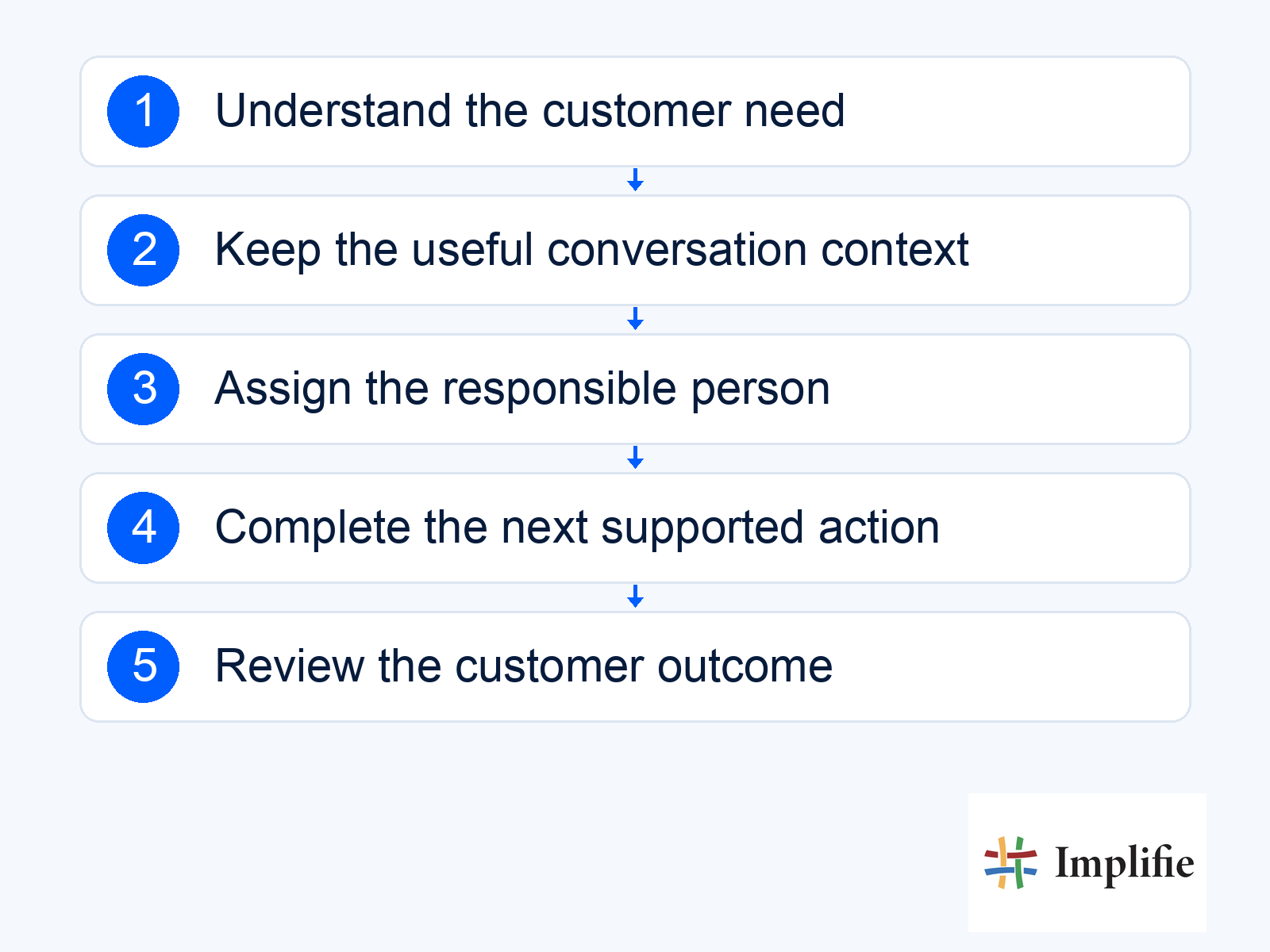
Our focus is the work between messages: understanding the enquiry, assigning responsibility and continuing at an appropriate time. Implifie’s shared inbox connects team replies with customer context, while follow-up workflows support planned next steps. These capabilities need a sensible process around them. A reminder is useful when it advances an agreed action; it becomes noise when it ignores a purchase, a refusal or an unresolved question.
- Continuity: Keep the useful history with the conversation so a colleague can continue it.
- Ownership: Make the next responsible person clear instead of leaving an enquiry unattended.
- Useful automation: Handle predictable steps without hiding uncertainty or trapping the customer.
- Connected information: Use the appropriate business record when an answer depends on facts outside the chat.
- Human judgement: Keep decisions and exceptions with the people authorised to resolve them.
These are practical standards for how we want the product to help, rather than guarantees about a particular revenue increase or team size. A business can use the platform to organise work, but the quality of the information and the choices made by the team remain important. The useful question is whether the customer can understand the next step and whether someone can complete it. That is a stronger test than counting how many automatic messages were sent.
Connect tools without losing responsibility
Many teams already have a system for customer records, bookings, orders or internal work. Moving every record is not the starting point for every project. First identify which information the conversation needs and where the authoritative version lives. Implifie’s supported webhooks and API workflows provide a route to evaluate custom connections. Each implementation still needs the appropriate access, data mapping and maintenance; an integration label alone does not prove that a business action has completed.
| Customer need | What the workflow can help organise | What still needs confirmation |
|---|---|---|
| Understand a product | Relevant question, variant and reply owner | Current product information and suitability |
| Request a service visit | Location, requirement and next responsible colleague | Actual availability and the booking decision |
| Ask about an order | Reference, conversation history and investigation owner | The store or carrier’s current record |
| Continue a sales enquiry | The agreed next step and an appropriate follow-up | Whether the customer’s situation has changed |
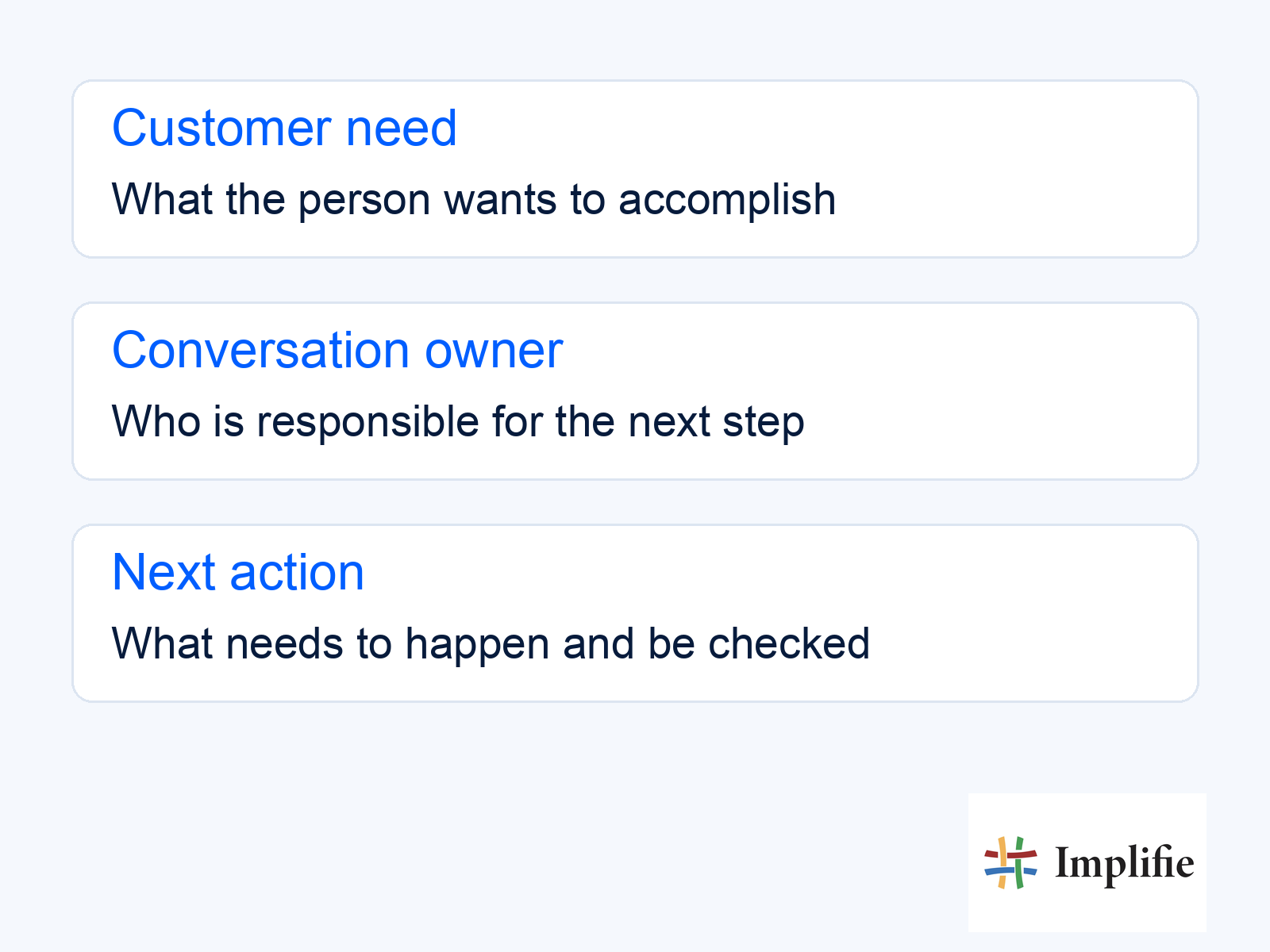
The concept below brings together three pieces of a useful handover: the customer’s need, the conversation owner and the next action. It is an explanation of the operating idea, not an application screen. Keep the same essentials in the team’s process. When another colleague takes over, they should see enough relevant context to help without exposing unrelated customer information or relying on a vague note such as “please follow up”.
Automation should leave room for a person
A predictable question can be answered from approved information. An uncertain order change, suitability question or exception may need a person. We want those paths to work together rather than compete. A customer flow can collect details and guide a supported next step; it should also make the human route clear. Collecting a request and completing it are different outcomes, and the customer deserves to know which one has happened.
That principle also applies when a conversation goes quiet. The right response is not always another message. The customer may have made a decision, asked for fewer updates or moved into a support discussion. A useful process notices that change and gives the team a way to stop, revise or investigate. Automation should help people honour a conversation, not replace that responsibility with a schedule nobody reviews.
Start with one customer journey worth improving
If you are evaluating Implifie, bring one recurring situation: an enquiry that loses context, a follow-up that is forgotten or a support handover that makes the customer repeat themselves. Identify the information required, the current tools and the people involved. Then test the journey with an ordinary request and an exception. A useful trial should show who receives the work, which facts they can rely on and what confirms the customer’s next step.
That is why Implifie exists: to help a team connect the conversation with the context, owner and action it needs. Start with one journey, keep the information accurate and make the human decision points clear. Judge the result by whether the customer receives useful help and the promised work gets done. We want the platform to make that responsibility easier to carry, one conversation at a time.
Frequently asked questions
Do I need to replace my existing CRM to evaluate Implifie?
Not necessarily. Start by identifying which records and tools the workflow needs. Confirm the supported connection, required access and actual data exchange before deciding what should move.
Do I have to use every module from the beginning?
No. Begin with a defined customer task and the capabilities needed to support it. Add more only when they solve another useful problem and the team can maintain the process.
Can automation make commitments on behalf of my business?
Use only actions your business has authorised and can verify. A collected request is not a confirmed booking, order amendment or other completed commitment.
What should I prepare for a consultation?
Bring a recurring customer scenario, the current tools, the information needed and the people who handle it. This makes it easier to discuss a specific supported workflow rather than a broad feature list.
