


The most useful message after a purchase may be an answer to a problem, not another offer. Customer loyalty on WhatsApp grows from the experience of being recognised and helped when it matters. A buyer who can resolve a delivery issue without repeating the story has a better reason to trust the next conversation. Start with that service experience before designing a reward campaign or asking every recent purchaser to buy again.
This guide focuses on retaining customers through useful conversations, not on promising that more contact creates loyalty. For a retail business, needs differ by product and buying cycle. Some customers need setup guidance, others need a replacement, and others have no reason to return for months. Use the actual relationship and current situation to choose whether a message is helpful at all.
Build customer loyalty on WhatsApp through dependable service
Make the first post-purchase contact easy to use. Explain how to get help, keep the order reference available and assign a person to requests that need a decision. A shared inbox can help the team continue the conversation, while the order or service record confirms the facts. A quick acknowledgement is useful only when it leads to a real next action. Avoid calling a request resolved because an automatic reply was sent.
Review the moments when the customer has to repeat information or chase an update. If an agent change loses the history, improve the handover. If the same product question appears repeatedly, improve the supplied instructions or listing. Retention work often starts with removing an avoidable difficulty rather than adding a discount. Record what was promised and who owns it so the next interaction reinforces the customer’s confidence instead of exposing a forgotten commitment.
Remember preferences without making assumptions
Save preferences the customer actually supplied and enough context to use them correctly. A preferred size, outlet or contact language can make the next conversation easier; an inferred interest may be wrong or outdated. The customer record should help the team ask a better question, not label a customer permanently. Offer an easy way to correct the information and avoid displaying unnecessary personal details in a promotional message.
- Stated preference: Record what the person actually said and when it was relevant.
- Current need: Check whether the preference still applies to this purchase or enquiry.
- Open issue: Review unresolved support before making another sales offer.
- Contact choice: Respect the person’s current communication preferences.
- Next owner: Make the promised follow-up visible to the responsible colleague.
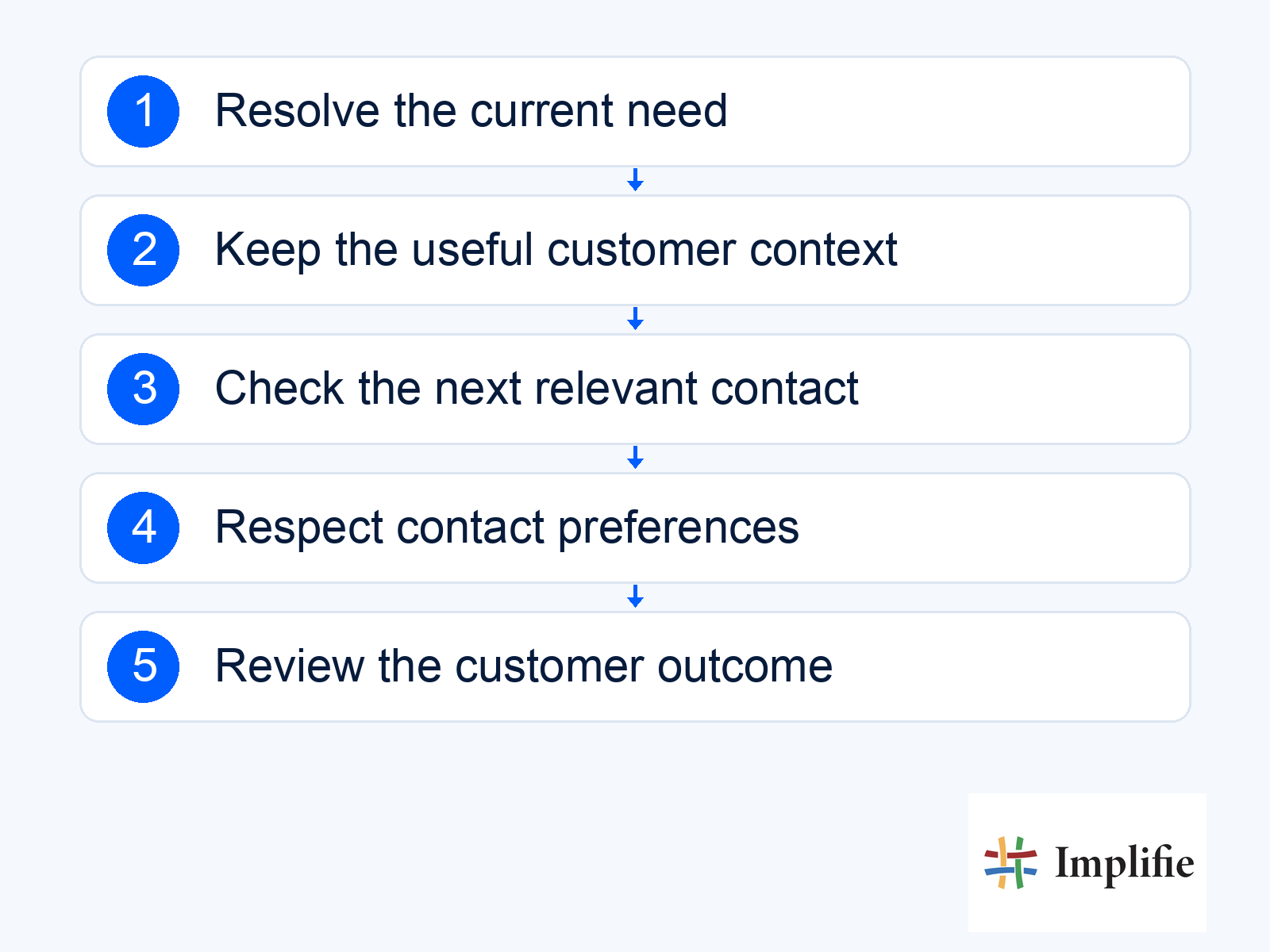
Choose post-purchase support before another promotion
Match the next message to what the customer is experiencing. For a product that requires assembly, accurate setup guidance may help. For an item still in transit, the customer needs the current tracking record. For a complaint, the next useful contact is a meaningful progress update. A promotion can wait when there is an unresolved service question. That sequencing shows the business understands the relationship rather than treating every purchase as a trigger for another sale.
| Current situation | Useful contact | Avoid |
|---|---|---|
| Needs help using the item | Relevant instructions or a support check | An unrelated offer before answering |
| Has an unresolved complaint | A factual progress update from the owner | A review request that ignores the issue |
| May need replenishment | An optional prompt based on a plausible buying cycle | Assuming every product needs a repeat purchase |
| Asked about a new range | A relevant update when facts are available | Repeated generic promotions |
| Prefers fewer messages | Update and honour the preference | Restoring the contact through another list |
Use feedback to close the loop
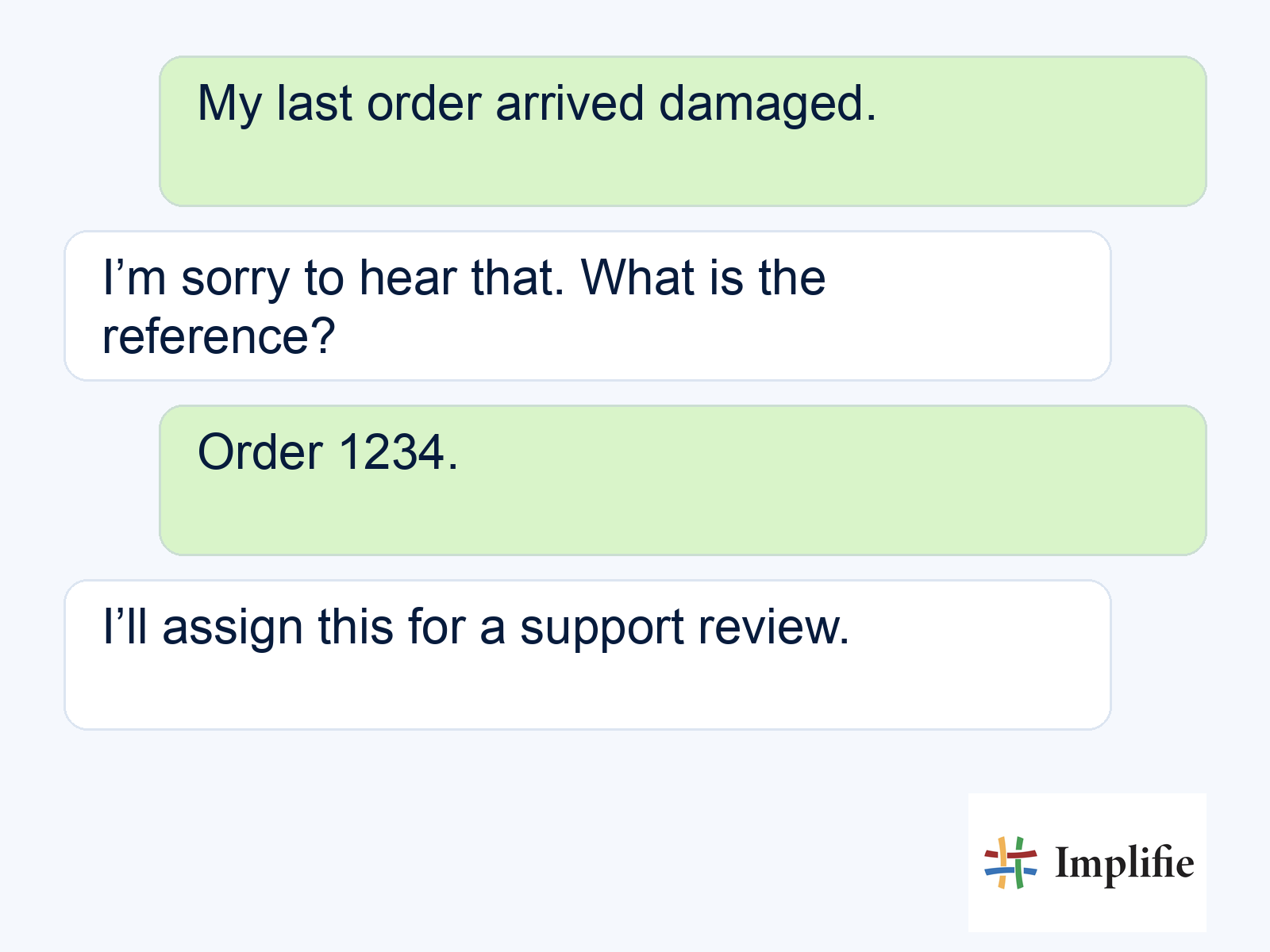
Ask a focused question after a meaningful experience and explain how someone can get help. When the answer is negative, assign the issue and tell the customer the next real step. The illustration below shows a problem being investigated, not a claim that a replacement has been approved. Keep the essential process in the team’s workflow: collect the reference, review the case and communicate what was confirmed. Feedback that nobody acts on can weaken the relationship further.
Avoid collecting long surveys that your team cannot review. Look for recurring causes, such as unclear size information or a difficult return instruction, and address them in the source material. Where support workflows help route an answer, check that the receiving person can make or obtain the necessary decision. A customer should not be passed between automated questions when the remaining problem is an operational exception.
Offer rewards only when the terms are real
A loyalty offer needs an actual eligibility rule, a current benefit and a redemption process the team understands. Do not imply that Implifie automatically provides a points ledger or membership programme unless your verified implementation supports it. A clear early-access invitation or relevant product update may be more useful than a complicated reward. If you use a code, check where it works, whether it can be combined with other offers and how support handles a failed redemption.
Use follow-up workflows to coordinate appropriate next steps, with checks for recent purchases, complaints and contact choices. Review the current messaging policy for permission and opt-outs. A saved customer relationship does not remove the need for appropriate communication. Give the customer control over the conversation and do not treat silence as an instruction to send increasingly frequent offers.
Measure retention through behaviour and service quality
Track repeat purchases or renewed service alongside the customer’s normal buying cycle, and keep the comparison consistent. A furniture purchase and a consumable reorder should not be judged against the same interval. Review unresolved cases, repeat contact about the same issue and customer feedback as well as sales. Use conversation reporting with the record that confirms the purchase or resolution. Messages read are not evidence that a customer has become loyal.
Sustainable customer loyalty on WhatsApp comes from accurate help, remembered context and useful reasons to return. Improve the service gaps first, keep preferences current and offer rewards only when the terms and fulfilment process are clear. Use real customer outcomes to choose the next change. The goal is a relationship people want to continue, rather than a contact list that receives more messages each month.
Frequently asked questions
Do more messages create more loyalty?
No. Contact needs a useful purpose and an appropriate frequency. Repeated irrelevant promotions can undermine the relationship.
Should every purchase trigger another offer?
No. Check the product’s buying cycle and any current support need. Instructions, tracking or problem resolution may be more useful.
Does this guide confirm a built-in loyalty-points programme?
No. A rewards ledger and redemption process need a verified implementation. Do not advertise a programme your business cannot actually fulfil.
How should negative feedback be handled?
Assign it to a responsible person, establish the next action and communicate the actual progress. Do not treat collecting the feedback as resolving the issue.
