


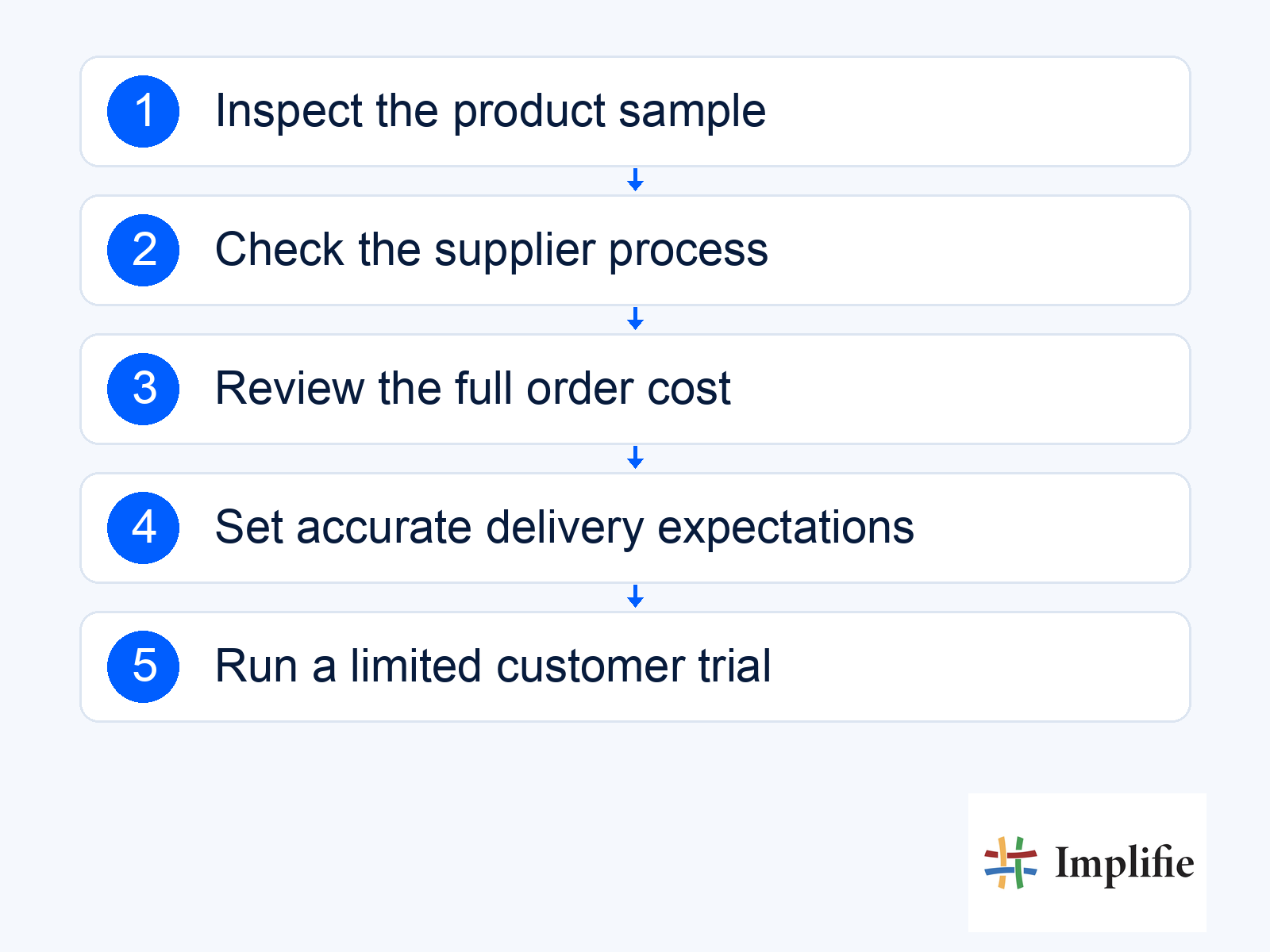
The supplier ships the parcel, but the customer bought from your store. That distinction is central to dropshipping for beginners. If the item is late, different from the description or difficult to return, the buyer still needs an answer from you. Before investing in a large catalogue or more traffic, check whether you can make an accurate product promise and support it after checkout. A business model with less inventory handling still needs active operational work.
Shopify describes dropshipping as selling products that suppliers ship to customers on the merchant’s behalf. This guide focuses on evaluating that arrangement and the customer journey around it. It does not rank supposedly profitable niches, recommend a supplier vendor or claim personal store results. Use a small, measurable trial to find out whether a particular product and supplier make sense for your audience and operating capacity.
Choose a product you can explain and support
Start with a specific customer need and the information required to make a buying decision. Check dimensions, materials, variants, instructions and any limitations before writing the product page. A generic supplier description may omit the detail customers ask about most. If you cannot explain which variant suits the use or how a return would work, resolve that before advertising. The product needs to be understandable to your team as well as attractive in a listing.
Order and inspect an appropriate sample where feasible. Compare it with the proposed photos and description, test the packaging and ask what happens when a supplier substitutes a component or variant. For safety-sensitive or regulated products, investigate the requirements of the market before selling. Shopify’s merchant guidance makes clear that using a supplier does not remove retailer responsibilities. Resolve product and market requirements with the relevant qualified adviser rather than assuming the supplier’s assurance is sufficient.
Dropshipping suppliers: test the full order journey
Use a trial order to understand processing, handover to the carrier, tracking and customer receipt. Ask which information will be available automatically and which questions need a supplier contact. A promised dispatch time and a carrier’s delivery estimate describe different stages. Shopify’s fulfilment explanation is useful for separating processing work from the subsequent delivery journey. Build your customer-facing wording from what you can verify.
- Product consistency: Confirm the actual item, variant and packaging match what you plan to sell.
- Processing evidence: Check when the supplier accepts, prepares and hands over an order.
- Tracking access: Identify the carrier record and who investigates missing updates.
- Return process: Confirm the destination, conditions and responsible contact.
- Exception owner: Know who resolves wrong items, damage and failed deliveries.
Calculate the economics of one completed order
Build a simple model using the selling price and the costs of actually serving the order. Include supplier cost, delivery, payment charges, customer acquisition and an allowance based on your evidence for returns or failed deliveries. A difference between selling price and supplier price is not the same as profit. If the model only works when every order arrives without a question or return, it is not a strong basis for expanding the store.
| Cost or adjustment | Question to answer | Why it matters |
|---|---|---|
| Supplier and product | What will the selected variant actually cost? | Prevents overstating the product margin |
| Shipping and handling | Who pays each delivery or split-parcel charge? | A visible shipping offer still has a cost |
| Payments and selling tools | Which transaction and operating costs apply? | Revenue is not the amount retained |
| Acquisition | What did the completed customer order cost to acquire? | Traffic alone is not a commercial result |
| Returns and support | What do observed exceptions cost to resolve? | A small issue rate can change the order economics |
Shopify’s shipping guide explains different ways merchants account for shipping charges. Choose a customer-facing price that matches your actual arrangement and disclose relevant conditions before checkout. Review cash timing too: suppliers, advertising and customer refunds may need payment before revenue is available for reuse. Keep the trial within an amount your business can sustain while you collect reliable evidence; there is no universal budget or break-even time in this guide.
Use WhatsApp support to clarify what is known
A WhatsApp ecommerce workflow can give customers a useful route to ask about a product or order. Use commerce conversations around a configured store connection and retain context in the customer record. Your supplier and carrier remain responsible for the information they establish. Do not describe a notification as evidence that a parcel has moved, or promise an order change before the real fulfilment process allows it.
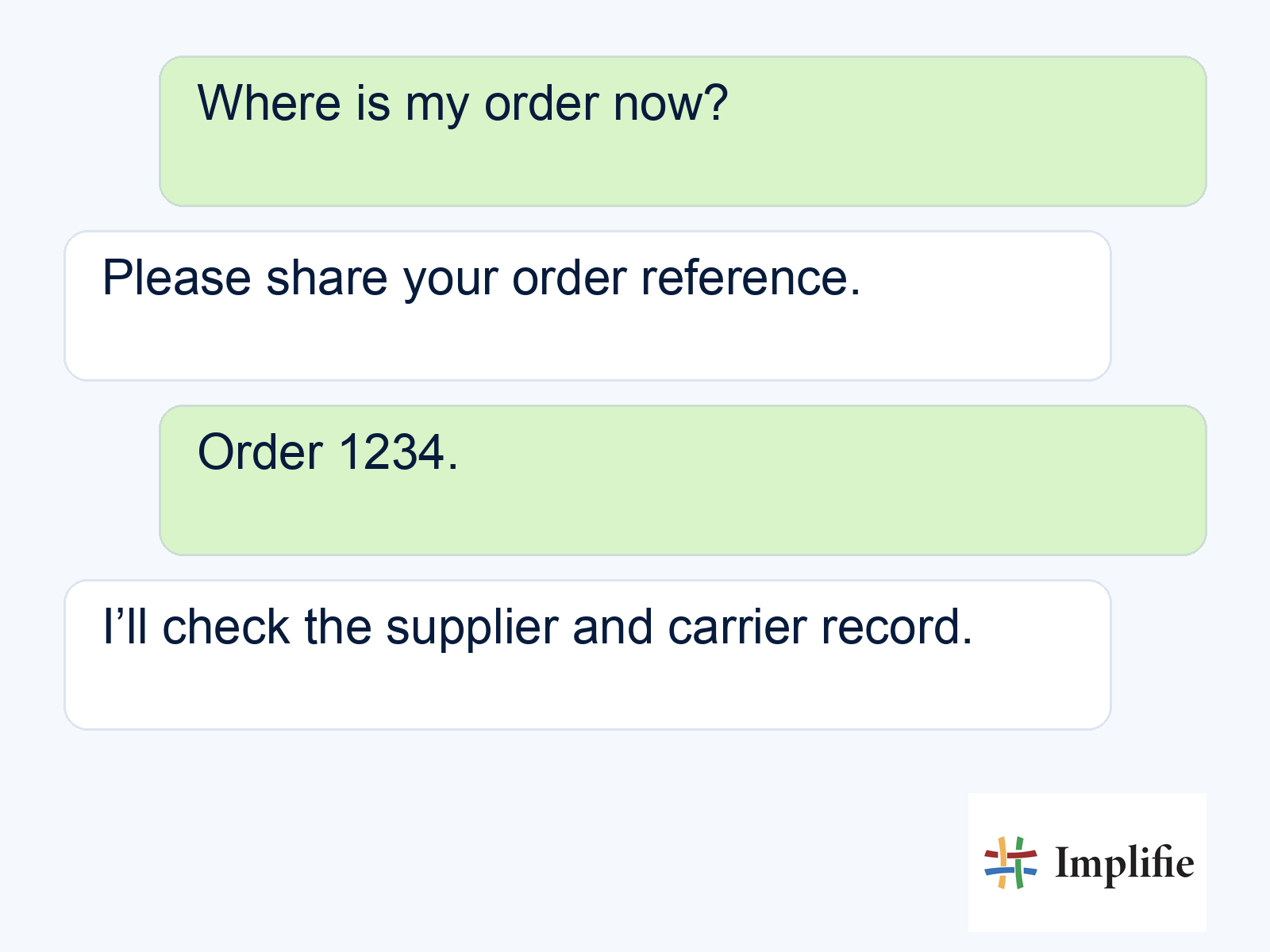
The example below is a fictional delivery enquiry, not a store result. The useful response is to request the order reference and check the current source, then tell the buyer what was confirmed and what remains open. Give that investigation a named owner through the shared inbox. Clear communication helps the customer understand the next step; it cannot compensate for a supplier that repeatedly fails to fulfil the promise.
Launch a small trial and review the failures
Choose a limited product range and test the complete buying experience on a phone. Check variant selection, the final price, order confirmation, tracking and the support route. Review what happened to each trial order, including the ones that needed intervention. If several buyers misunderstand the same detail, improve the listing. If the supplier cannot provide reliable information, resolve that relationship before increasing demand. More traffic will expose an unresolved operating gap to more customers.
Use the trial to decide whether to continue, revise or stop. Record completed orders, contribution after relevant costs, delivery exceptions, refunds and repeat enquiries. Avoid treating an attractive revenue day as proof of a stable business or borrowing another seller’s return figures. A dependable supplier and an accurate product promise give you something to improve; unsupported claims about fashionable niches or effortless income do not.
Test the promise before expanding the store
Useful dropshipping for beginners begins with a product you understand, a supplier you have checked and an order journey you can support. Review the full cost, publish accurate information and give exceptions an owner. Use customer questions and completed orders to decide the next investment. Expand when the evidence supports the operating model, rather than assuming that avoiding stock handling removes the work of running a retail business.
Frequently asked questions
Does dropshipping remove customer-service responsibility?
No. The supplier may ship the item, but the merchant still needs an accurate customer promise and a process for questions and exceptions.
Which niche is guaranteed to be profitable?
No niche is guaranteed here. Evaluate customer demand, product suitability, supplier performance and full order economics through a limited trial.
Can WhatsApp automation fix unreliable fulfilment?
No. It can support communication around accurate records and help assign issues. The underlying supplier and delivery problems still need to be resolved.
Should I list many products immediately?
A smaller range can be easier to inspect, explain and support. Expand when you have evidence that the supplier and customer journey work reliably.
